Beginner’s Guide to Beach Fishing Success
Beach fishing can be an exciting and rewarding experience for beginners looking to explore the world of fishing. Whether you’re on a tropical vacation or simply enjoying a day at the local beach, beach fishing offers unique opportunities to catch a variety of fish species. To ensure a successful fishing trip, it’s important to understand the gear and equipment required, choose the right fishing spot, select the appropriate bait and lures, learn effective fishing techniques, and prioritize safety measures. Here’s a comprehensive guide to help beginners get started with beach fishing.
Key takeaways:
- Choosing the right gear: A fishing rod and reel, fishing line, and tackle are essential for beach fishing. Beginners should ensure they have the appropriate equipment before heading to the beach.
- Selecting the best fishing spot: Understanding tides, currents, and wind conditions are crucial in finding the right spot for beach fishing. Pay attention to these factors to increase your chances of catching fish.
- Effective techniques and safety measures: Practice proper casting and retrieval techniques, be patient, and observe your surroundings. Additionally, check local regulations and use appropriate safety gear to ensure a safe and enjoyable beach fishing experience.
Gear and Equipment for Beach Fishing
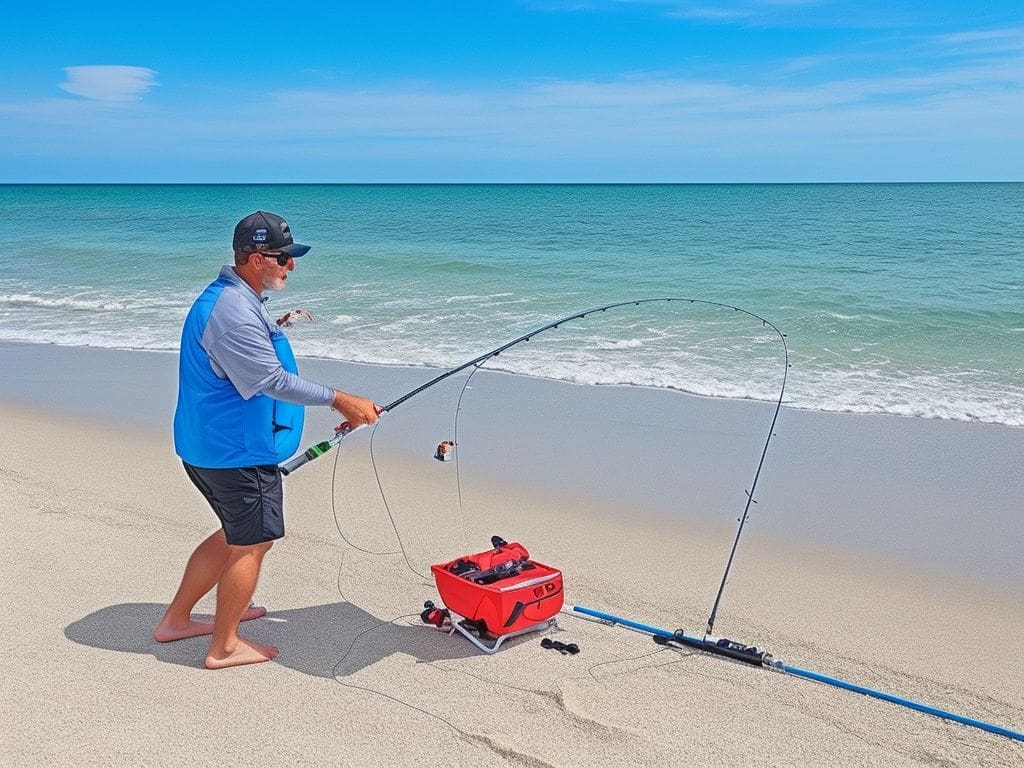
Gear up for your beach fishing adventure as we explore the essential equipment that will make your angling experience unforgettable. Discover the ins and outs of the fishing rod and reel, the crucial role of the fishing line, and the array of tackle and rigs at your disposal. Get ready to cast your line with confidence and uncover the secrets to success in this exciting sub-section of beach fishing essentials.
Fishing Rod and Reel
Choosing the right fishing rod and reel is essential for a successful beach fishing experience. When it comes to the fishing rod, it’s important to select one that suits the type of fishing you plan to do. Light or medium rods are great for casting distance, while heavy rods are better for targeting larger fish. As for the fishing reel, it’s crucial to consider your skill level and preferences. Spinning reels are known for their versatility and ease of use, while baitcasting reels offer more control and power.
When looking at the material and construction of the fishing rod and reel, it’s advisable to opt for durable materials like graphite or fiberglass. These materials are lightweight and corrosion-resistant. Additionally, you should ensure that the size and weight of the rod and reel are comfortable for you to handle and cast without straining your arm. It is also important to have compatibility between the rod and reel in terms of size and weight, allowing for a well-balanced setup.
If you need further guidance in choosing the right fishing rod and reel, it’s always beneficial to consult local fishermen or visit a reputable tackle shop for expert advice.
Fishing Line
When it comes to fishing line for beach fishing, there are a few key considerations to keep in mind.
- Strength: Select a fishing line that possesses sufficient strength to handle the fish species you are targeting. Choose a line with a high pound test rating to ensure it can endure the pressure.
- Diameter: Opt for a thinner fishing line as it is less visible to fish and allows for longer casting distances. Consider using a braided line for its thin diameter and high strength.
- Durability: Beach fishing can expose your line to abrasive sand and rocks. Search for a fishing line that is specifically designed to be abrasion-resistant, thus preventing damage and breakage.
- Visibility: Clear or low-visibility fishing lines are usually the preferred choice for beach fishing to avoid startling the fish. However, if you find yourself fishing in murky water, a high-visibility line can assist you in detecting bites.
Tackle and Rigs
When it comes to beach fishing, having the right tackle and rigs is crucial for a successful catch. Here are some vital considerations in this regard:
- Fishing rod and reel: Investing in a sturdy, medium to heavy-duty rod and reel combo is essential for beach fishing.
- Fishing line: Opting for a strong and durable monofilament or braided line that can withstand the surf and potential obstacles is important.
- Tackle: Using a variety of sinkers and hooks to suit different fishing conditions and target species is necessary.
- Rigs: Choosing from popular rigs like the Carolina rig, fish finder rig, or high-low rig, depending on the fishing scenario, is recommended.
By having the right tackle and rigs, you can significantly enhance your chances of hooking and landing fish while beach fishing.
Choosing the Right Spot for Beach Fishing
When it comes to beach fishing, one crucial aspect is choosing the right spot. Understanding tides and currents, finding structure and channels, and paying attention to wind and weather conditions all play a significant role in determining where to cast your line. So, let’s dive into each of these sub-sections and uncover the secrets to selecting the perfect spot for a successful beach fishing experience!
Understanding Tides and Currents
Understanding tides and currents is crucial for a successful beach fishing experience. Tides play a vital role in the movement and feeding patterns of fish. Researching tide charts and comprehending the behavior of the target species can aid in determining the optimal fishing times. Additionally, currents are an important factor to consider as they influence the movement of baitfish and predators. Anglers should strategically position themselves to capitalize on these currents. By having a thorough understanding of tides and currents, fishermen can enhance their chances of catching more fish and have a productive day at the beach. Fun fact: Did you know that tides are a result of the gravitational pull of the moon and sun on Earth’s oceans?
Finding Structure and Channels
Finding structure and channels is crucial when beach fishing, as it greatly enhances your opportunities of catching fish. Here are some vital points to consider:
- Understanding tides and currents: Study tide charts and acquire knowledge about how the movement of water impacts fish behavior. Look for areas where water is in motion, such as rip currents or tidal channels.
- Finding structure: Seek out underwater formations such as sandbars, drop-offs, and rock formations. These serve as hiding spots for fish and create perfect opportunities for ambush feeding.
- Paying attention to wind and weather conditions: Wind can concentrate baitfish and predators along specific areas of the beach. Keep an eye out for wind-blown debris or spots where waves are breaking differently.
By placing emphasis on discovering structure and channels, you can significantly enhance your chances of success in beach fishing.
Paying Attention to Wind and Weather Conditions
When engaging in beach fishing, it is imperative to pay close attention to wind and weather conditions. These key factors hold significant influence over the outcome of your fishing excursion. Here are several important aspects to take into consideration:
– Wind direction: Powerful winds blowing towards the shore have the potential to generate rough surf, thereby making fishing quite challenging. Seek out sheltered areas that are shielded from the forceful winds.
– Wind speed: Elevated wind speeds can pose difficulties when it comes to casting and controlling your fishing line. Adjust your casting technique accordingly and opt for heavier sinkers to keep your bait securely in place.
– Weather changes: Sudden fluctuations in weather, such as storms or fronts, can significantly impact fish behavior. Prior to a storm, fish are more likely to be active and feeding, whereas during or after a storm, their activity levels may decrease.
By diligently paying attention to wind direction, wind speed, and weather changes, you can significantly enhance your chances of enjoying a successful and fruitful beach fishing experience.
Bait and Lure Selection for Beach Fishing
Looking to up your beach fishing game? Dive into the world of bait and lure selection for beach fishing. In this section, we’ll explore the art of choosing the right bait and lures to lure in the big ones. From natural baits to artificial lures, discover the secrets to enticing your target catch. Get ready to reel in the excitement and increase your chances of a successful beach fishing adventure.
Natural Baits
Natural baits play a vital role in beach fishing, attracting a diverse range of fish species. Here is a table of popular natural baits used in beach fishing:
| Bait Type | Target Fish Species |
| Worms (e.g., sandworms, bloodworms) | Striped bass, flounder, surfperch |
| Crabs (e.g., blue crabs, fiddler crabs) | Redfish, black drum, sheepshead |
| Shrimp | Snook, tarpon, pompano |
| Clams (e.g., surf clams, quahogs) | Striped bass, weakfish, bluefish |
Using natural baits in beach fishing provides an authentic and enticing scent and texture that mimics the fish’s natural prey. Experimenting with different natural baits can help increase your chances of success on your next beach fishing adventure.
Artificial Lures
When it comes to beach fishing, artificial lures can be a great option for attracting a variety of fish species. Here are some types of artificial lures commonly used in beach fishing:
- Topwater lures: These lures imitate injured or struggling baitfish on the water’s surface, creating a commotion that attracts fish.
- Jigs: Artificial lures are versatile lures that can be used for both casting and vertical jigging. They come in various sizes, weights, and colors to imitate different prey species.
- Soft plastics: Artificial lures are made of soft, flexible materials that mimic the movement and appearance of various baitfish and invertebrates. They can be rigged on a jighead or used with a Texas or Carolina rig.
- Spoons: Artificial lures are metal lures with a concave shape that creates a wobbling action when retrieved. They can be particularly effective for targeting species like mackerel and trout.
- Swimbaits: Artificial lures imitate the appearance and swimming action of baitfish, making them effective for attracting predatory fish such as bass, snook, and tarpon.
Experimenting with different colors, sizes, and retrieval techniques can help determine which artificial lures work best in your local beach fishing spots.
Beach Fishing Techniques and Tips
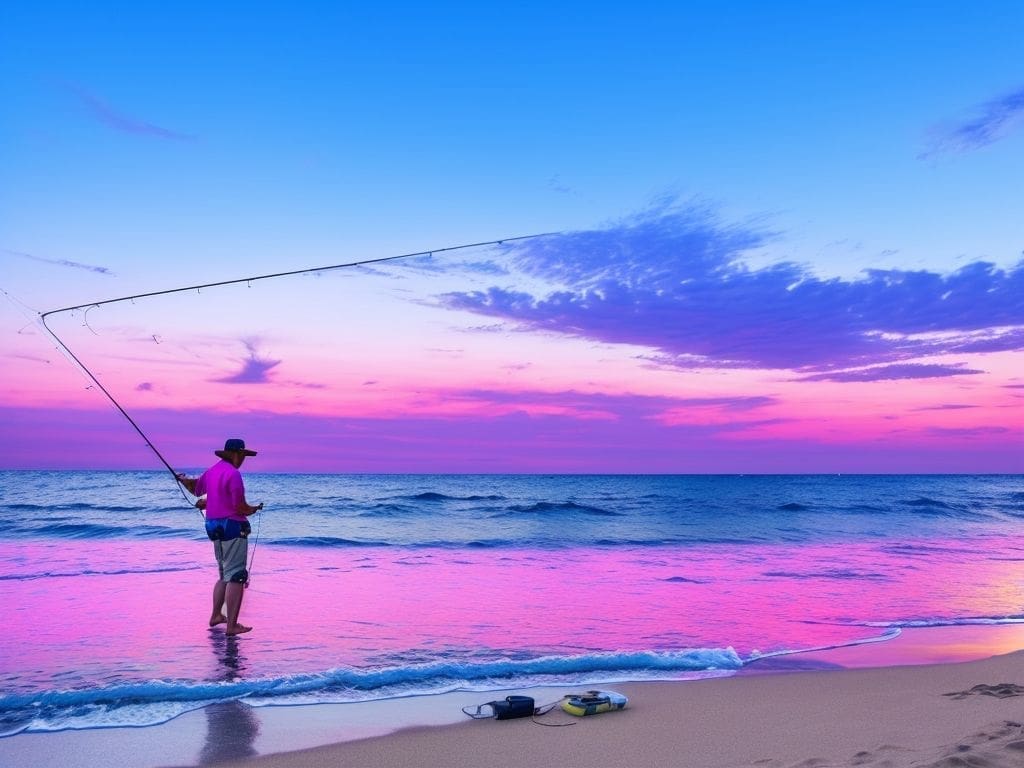
Mastering the art of beach fishing requires a blend of technique, patience, and proper handling. In this section, we’ll dive into essential beach fishing techniques and tips that will help you reel in the big one. Get ready to cast and retrieve with precision, sharpen your patience and observation skills, and learn the importance of proper handling and releasing practices. Whether you’re a beginner or a seasoned angler, these expert insights will enhance your beach fishing game.
Casting and Retrieving
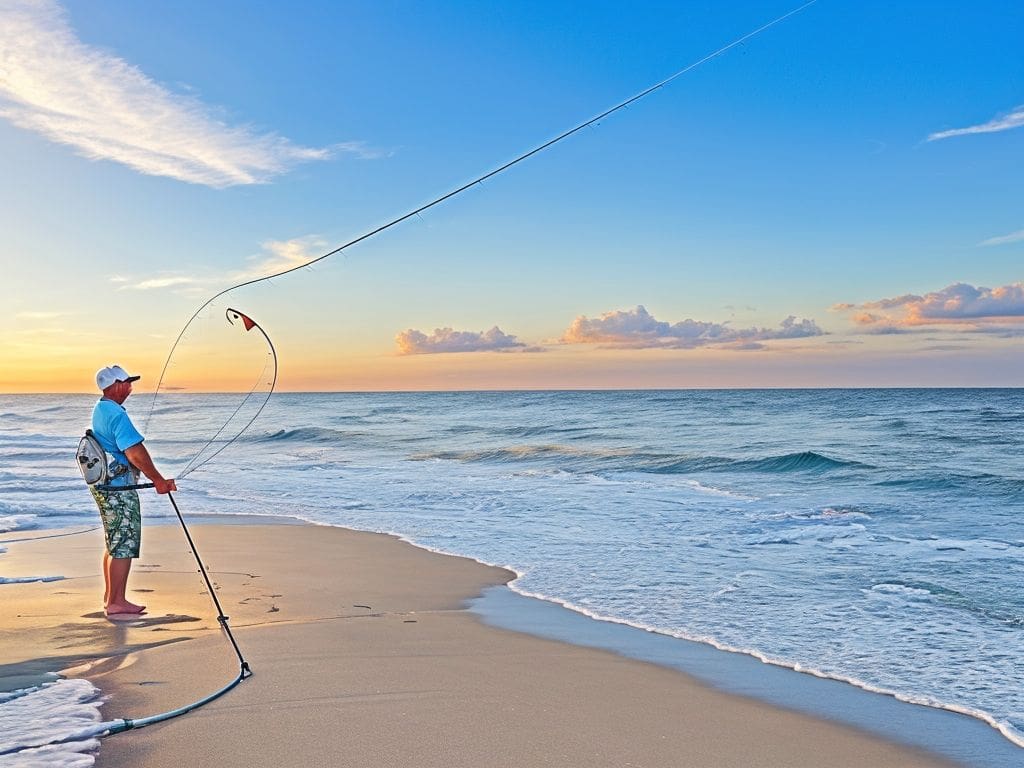
Casting and retrieving is an essential technique in beach fishing that involves accurately casting your bait or lure into the water and retrieving it to attract fish. Here are the steps to master this technique:
- Select the appropriate fishing rod and reel combo for casting long distances.
- Hold the rod firmly and use your dominant hand to release the line while keeping your thumb on the reel spool.
- Make a smooth forward motion to cast the bait or lure, aiming for the desired spot in the water.
- Once the bait or lure lands, engage the reel and start retrieving the line at a steady pace.
- Add occasional twitches or pauses to mimic the movement of prey and attract fish.
- Pay attention to any bites or tension on the line, and be ready to set the hook.
- Continue retrieving the bait or lure until it reaches the shore or boat.
During a beach fishing trip, I practiced my casting and retrieving technique using a soft plastic lure. After a few casts, I felt a strong tug on the line and quickly set the hook. It turned out to be a large striped bass that put up a thrilling fight. Thanks to my casting and retrieving skills, I was able to successfully land and release the fish. It was an unforgettable experience that showcased the effectiveness of this technique in beach fishing.
Patience and Observation
Patience and observation are crucial skills for achieving success in beach fishing. By taking the necessary time to carefully observe the water conditions and the behavior of the fish, you can greatly enhance your chances of landing a substantial catch. The key is to exercise patience when waiting for a fish to bite, as it may require some considerable time. It is essential to carefully observe the tides, currents, and wind patterns in order to determine the most opportune moments and locations for engaging in fishing activities. Furthermore, closely monitoring the movement and feeding habits of the fish will enable you to make the necessary adjustments to your bait or lure selection. By possessing both patience and a keen ability to observe, you will be on your way to becoming a highly skilled beach angler and enjoying an immensely rewarding fishing experience.
Proper Handling and Release
- Properly handle and release fish to ensure their survival and the sustainability of the ecosystem.
- To minimize damage to the fish, use barbless hooks.
- Gently handle the fish and avoid touching their eyes and gills.
- Prevent stress and suffocation by keeping the fish in the water as much as possible.
- If you want to take a photo, wet your hands first and support the fish’s weight with both hands.
- Use long-nose pliers or a dehooking tool to carefully remove the hook.
- When releasing the fish, gently place it back in the water, facing the current.
- Wait until the fish has recovered and regained its strength before allowing it to swim away on its own.
Remember, by properly handling and releasing fish, you contribute to the preservation of marine life and the enjoyment of future anglers.
Beach Fishing Safety Measures
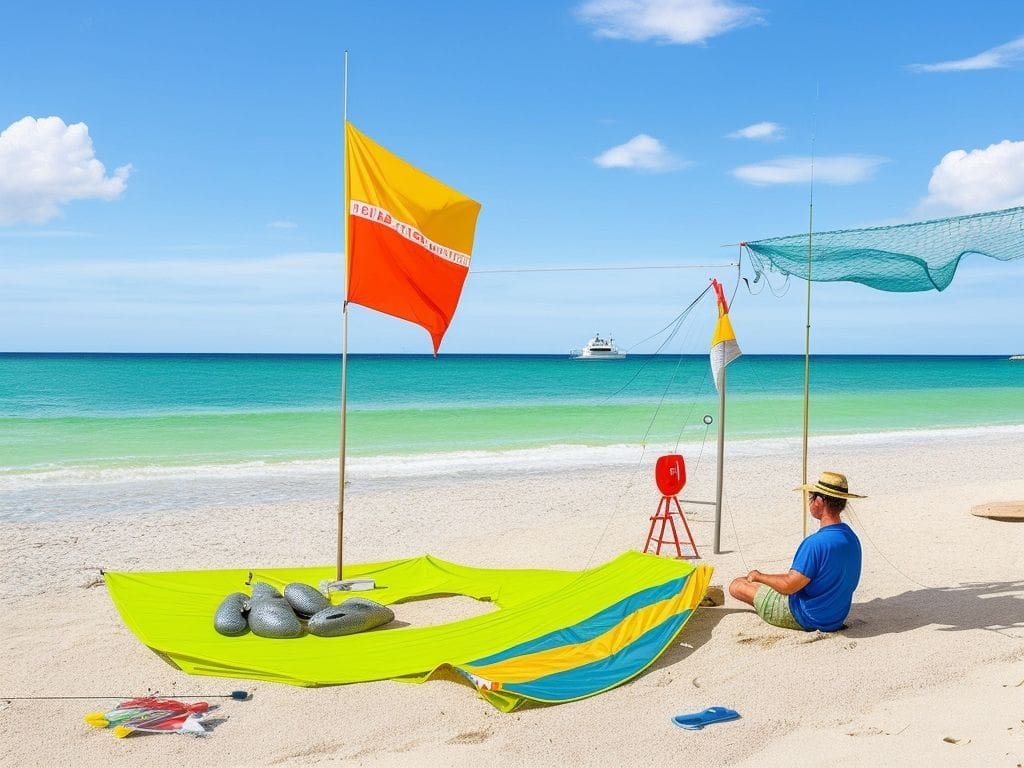
When it comes to beach fishing, safety should always take priority. In this section, we will explore essential safety measures that every beginner must keep in mind. From checking local regulations to utilizing proper safety gear, we will delve into the necessary precautions for a smooth and secure beach fishing experience. So, grab your fishing rod and let’s ensure we’re well-prepared to enjoy the thrill of the catch without compromising on our well-being.
Checking Local Regulations
When engaging in beach fishing, it is crucial to check local regulations and adhere to them to ensure a safe and legal fishing experience. Different regions may have specific rules and restrictions to protect fish populations and maintain environmental balance. Some common regulations include fishing licenses or permits, catch limits, size restrictions, and designated fishing areas. By familiarizing yourself with these regulations, you can avoid fines and contribute to sustainable fishing practices. Remember to check local regulations by consulting with local authorities or using fishing guides or websites, to stay updated on any changes. Checking local regulations is an essential step for responsible beach fishing.
Use of Proper Safety Gear
Proper safety gear is of utmost importance when engaging in beach fishing to ensure both a safe and enjoyable experience. Here are some essential items to consider:
- Life jacket or personal flotation device (PFD): It is crucial to wear a PFD, especially if you are fishing from a boat or in an area with strong currents.
- Protective footwear: Choose sturdy shoes with good grip to prevent slips and falls on slippery rocks or uneven surfaces.
- Sun protection: Remember to wear a hat, sunglasses, and sunscreen to shield yourself from harmful UV rays.
- First aid kit: It is essential to have a basic first aid kit on hand in case of minor injuries or accidents.
- Beach fishing pole holder: Utilizing a pole holder can help prevent accidental injury and keep your fishing gear secure when not in use.
Always prioritize safety when beach fishing. Take the necessary precautions, stay aware of your surroundings, and most importantly, have fun!
Common Fish Species to Target in Beach Fishing
To enhance your chances of success while beach fishing, consider targeting the following common fish species:
| Fish Species | Description |
|---|---|
| Striped bass | These fish are popular for their strong fight and delicious taste. |
| Flounder | Typically found near the shoreline, flounder are known for being easy to catch and having a delicate flavor. |
| Red drum | Anglers often find excitement in catching red drum, a species popular in coastal areas. |
| Bluefish | Known for their aggressive nature, bluefish provide an exhilarating fight. |
| Weakfish | Highly sought after for their delicious flesh, weakfish are usually found in sandy areas. |
Understanding the habits and preferences of these species can greatly improve your chances of success while beach fishing.
Facts:
Some Facts About Beach Fishing for Beginners:
- ✅ Beach fishing is a popular activity for beginners interested in sea fishing. (Source: The Beginner’s guide to shore fishing by Simon Day)
- ✅ Starting off with affordable equipment is recommended for beginners, as they may not enjoy the activity. (Source: The Beginner’s guide to shore fishing by Simon Day)
- ✅ A cheap combo deal for a rod and reel is a good option for beginners to get started. (Source: The Beginner’s guide to shore fishing by Simon Day)
- ✅ Fixed spool reels are easier to use and do not tangle the line, making them a suitable choice for beginners. (Source: The Beginner’s guide to shore fishing by Simon Day)
- ✅ Consulting local tackle shops or online reviews is recommended before buying a fishing rod, considering the type of fishing one plans to do. (Source: The Beginner’s guide to shore fishing by Simon Day)